
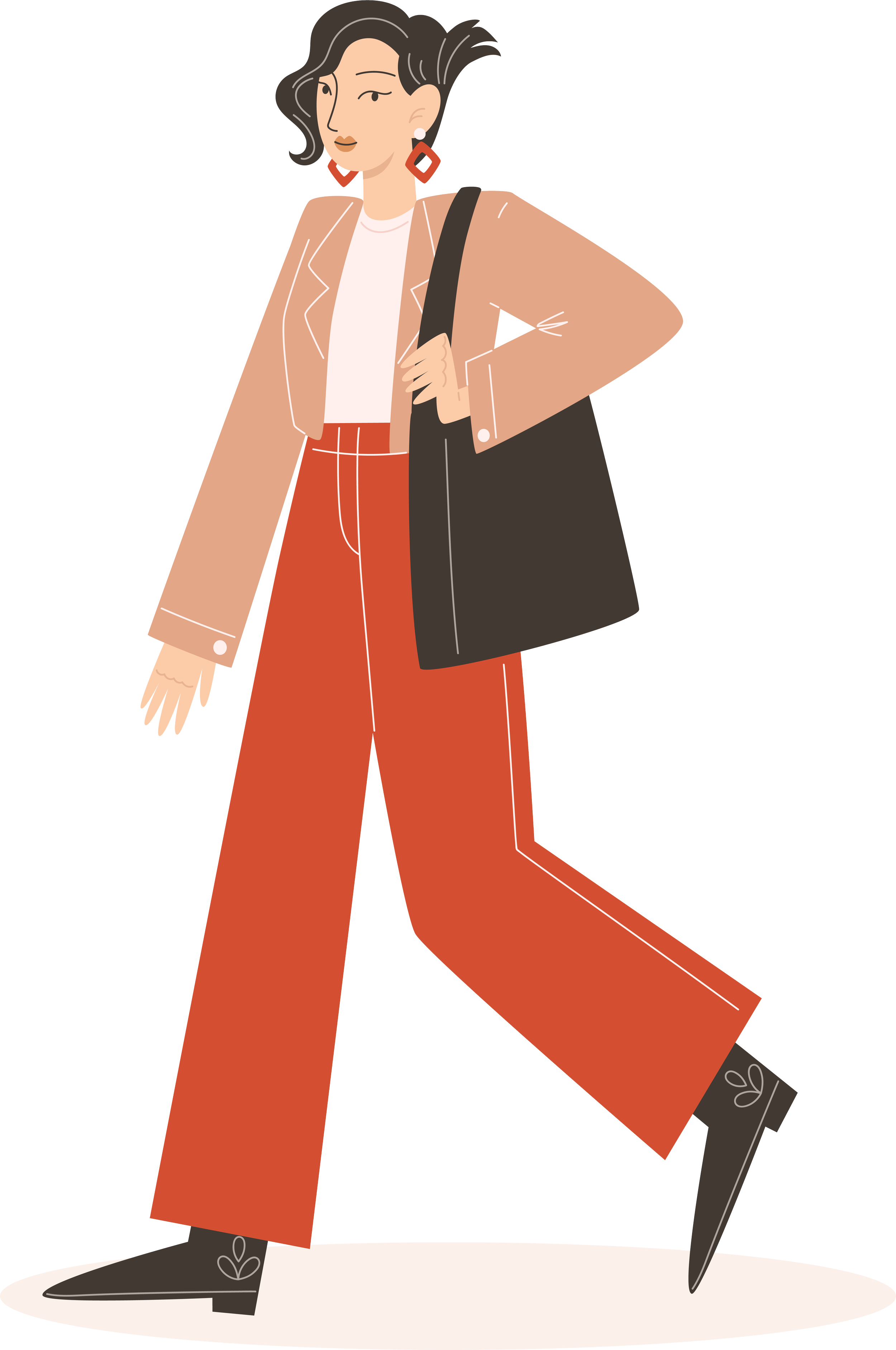
How you transport your daily essentials has a big impact on your musculoskeletal health. We often see patients with persistent upper trapezius tightness, unexplained neck stiffness, and chronic lower back fatigue. Folks commonly attribute these symptoms to sitting at a desk or sleeping in an awkward position, but the actual culprit is frequently hanging right over their shoulder.
How purses and messenger bags torque the spine
The human spine is designed to distribute force evenly along a vertical axis. When you hang a purse, messenger bag, or heavy tote over one shoulder, you introduce an asymmetrical off-axis load that forces your body to compensate.
When weight sits exclusively on one side of the body, two biomechanical shifts occur:
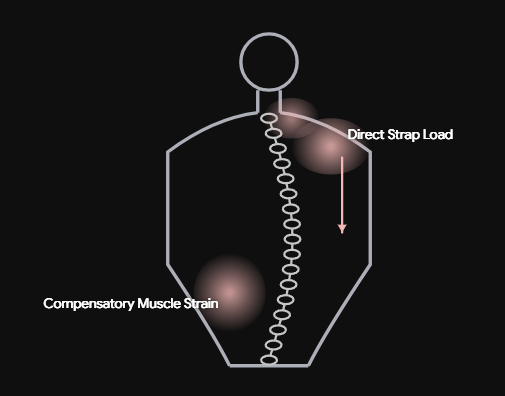
A quick sketch of a person showing the impacts a single-strap bag has on the body.
Asymmetrical muscle recruitment: To prevent the strap from sliding off, the upper trapezius and levator scapulae on the loaded side contract continuously. Meanwhile, the opposite side muscles must fire intensely to keep your torso from tipping over.
Uneven disc compression: A 2022 biomechanical study published in PMC demonstrated that single-shoulder and handbag carries create significantly higher peak shear stress and asymmetrical compression on the lower lumbar intervertebral discs compared to balanced two-strap carries.
Over time, carrying an asymmetrical load acts like driving a car with misaligned tracking. It creates chronic overcompensation on one side of your neck and lower back, rotates the pelvis, and locks up the thoracic spine—which directly counters the structural gains made during your chiropractic adjustments and massage therapy sessions.
Bilateral benefits
Bilateral loading—using both shoulders—keeps the weight centered over your body's true center of gravity. When weight is balanced, your core muscles can stabilize your posture without resorting to reactive, single-sided spasms.
However, simply switching to a backpack doesn't automatically solve everything. A poorly fitted or sagging backpack creates a different mechanical problem: A backward lever. When a bag hangs low toward the glutes, it pulls your shoulders backward, forcing you to lean your head and torso forward to compensate. As Mayo Clinic research on backpack safety points out, this forward lean flattens the natural lumbar curve, overworks the neck flexors, and dramatically increases the effective weight on your cervical spine.
To get the full ergonomic benefit of a two-strap system, look for bags with these core structural features:
Wide, padded shoulder straps: Narrow straps compress the brachial plexus nerves and subclavian blood vessels in the shoulder, causing numbness and tingling down the arms.
Sternum and waist straps: A sternum strap prevents the shoulder straps from flaring outward, while a waist belt transfers up to 70% of the load off the delicate thoracic spine and directly onto the stable pelvic girdle.
High and tight positioning: The main bulk of the bag should rest between the shoulder blades, never dropping more than two inches below your natural waistline.
If your daily routine requires carrying a purse or single-strap briefcase, small changes can prevent long-term strain:
Keep total weight under 10–15% of your body weight: Weigh your bag once a week to clear out unnecessary items.
Crossbody execution: Wear single straps diagonally across the chest rather than straight down one shoulder to bring the weight closer to your midline.
Alternate sides intentionally: If using a shoulder bag or handbag, switch shoulders every 15 to 20 minutes to give overworked paraspinal muscles a chance to recover.
We’re fortunate to live in a city full of craftspeople who take functional design seriously. A quick search turned up several local options if you’re looking for a bag upgrade.
September in Portland: El Grito Portland
September 15 and 16 at the Moda Center. “Each year, thousands of participants come together to celebrate the rich and diverse Latino/a/e culture, honoring traditions, our ancestors and indigenous heritage.” Visit the website.

Credit: Lara Media and El Grito Portland
Come visit us at Parkside
Come see our expert team at Parkside Clinic, where we tailor our care to your specific condition and tap into your body’s natural healing ability. Make an appointment, or if you have any questions, contact us.