
In many parks in Portland, you have likely heard the familiar, rhythmic thwack of a pickleball game. The sport has absolutely exploded, drawing in players of all ages because it is incredibly fun, social, and accessible. However, local clinics and emergency rooms are seeing a corresponding explosion in pickleball-related injuries. Because the court is small, the game requires sudden, explosive changes of direction, repetitive swinging, and awkward lunges. When players jump into the sport without properly conditioning their joints for these specific movements, their tendons take the brunt of the impact.
Lateral lunges and your Achilles
Unlike running or cycling, which involve continuous, predictable forward motion, pickleball is a game of starting and stopping.
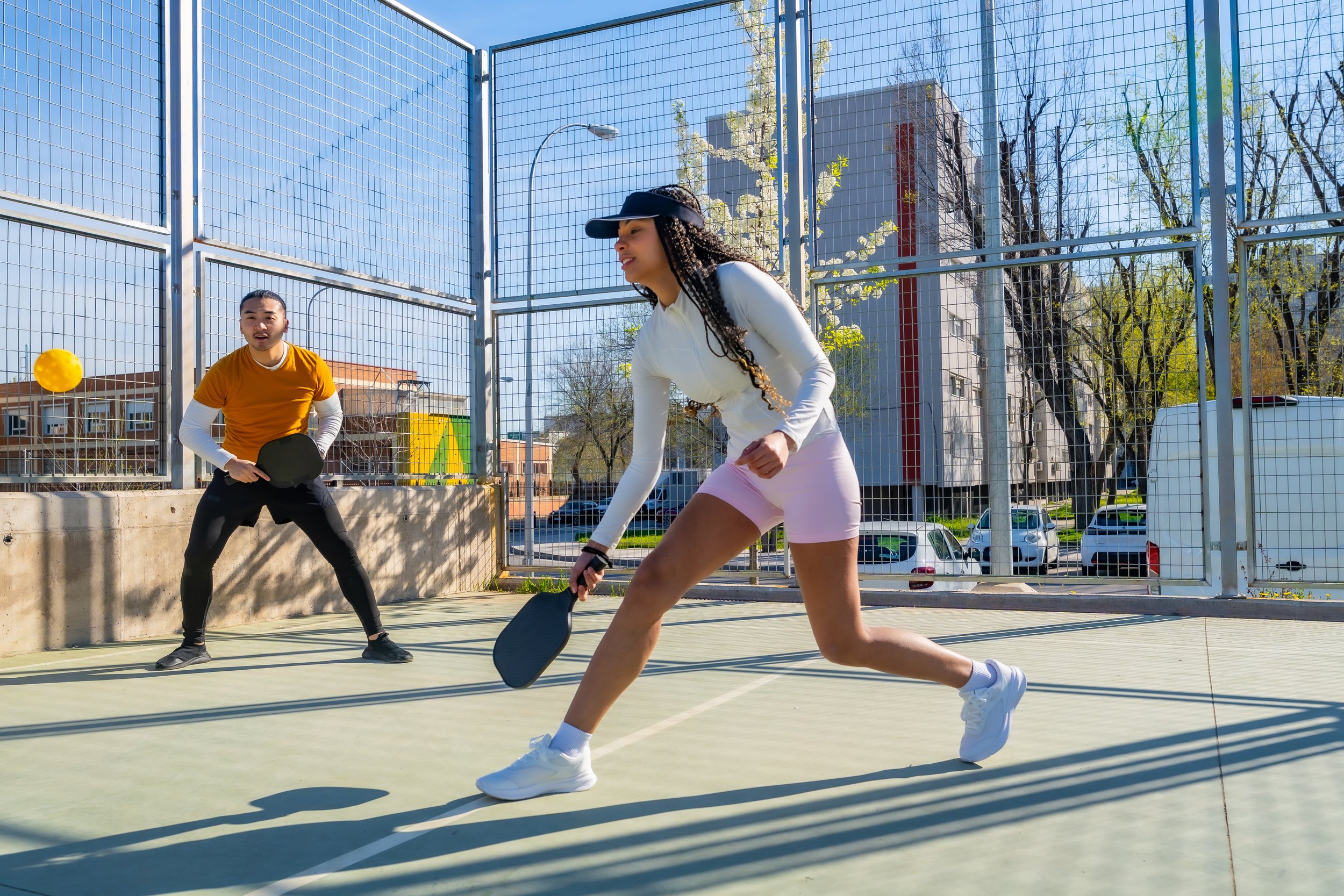
When you rush the net (the "kitchen") or lunge to return a wide shot, you are asking your lower leg to act as a sudden brake. This places immense, instantaneous force on your Achilles tendon—the thick band of tissue connecting your calf muscles to your heel bone.
Achilles tendinitis: Repeatedly launching off the balls of your feet causes micro-tears in the tendon. Without proper recovery, this develops into a chronic, aching stiffness in the back of the heel, especially noticeable when you first wake up in the morning.
The calf strain connection: The explosive push-offs required in pickleball place massive demand on the gastrocnemius and soleus muscles in your calves. When these muscles are tight from everyday walking or sitting, they lose their elasticity. During a sudden lunge, instead of the muscle stretching, the force is transferred directly to the Achilles, drastically increasing the risk of a rupture.
Pickleball elbow
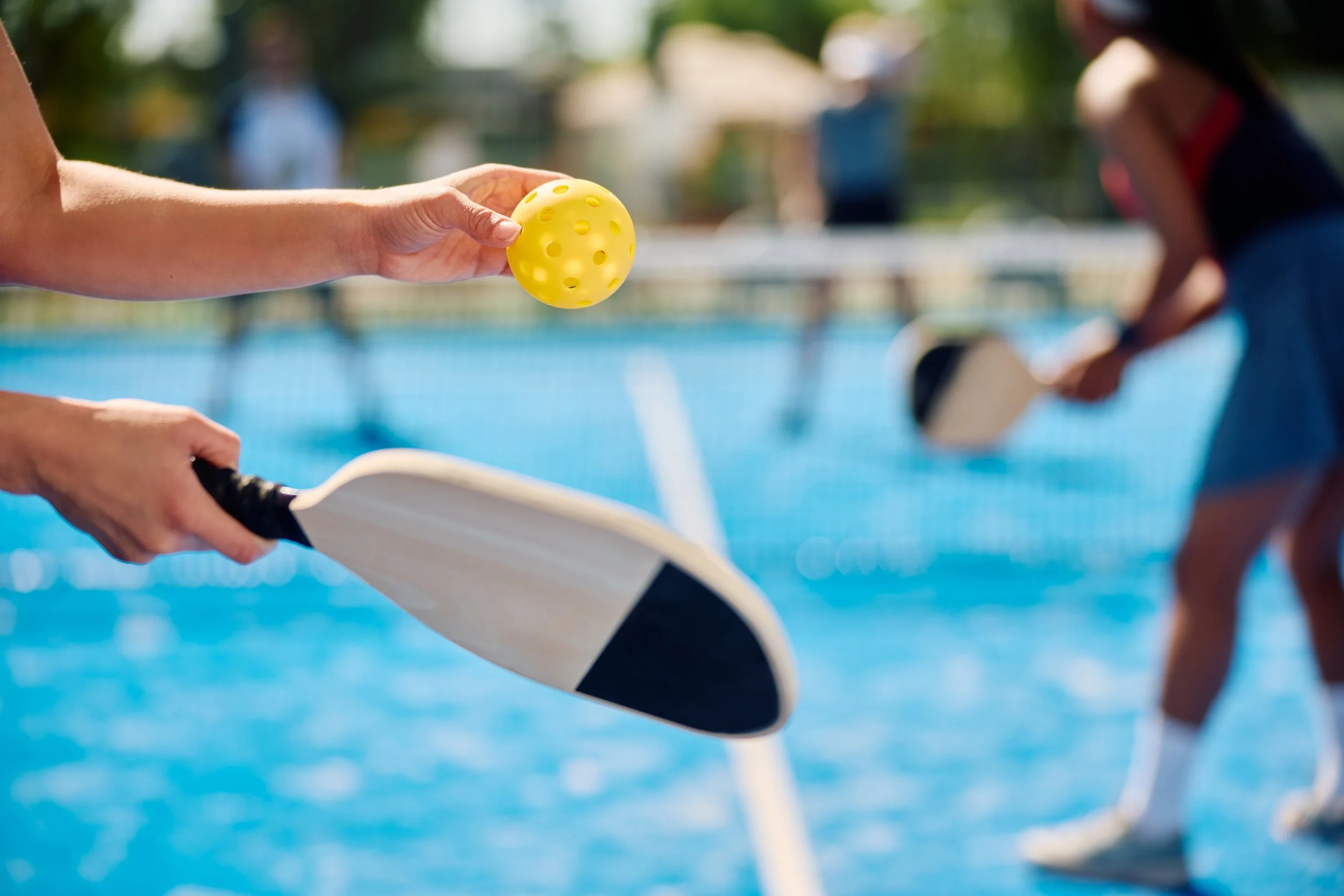
You do not need a heavy tennis racket to develop tennis elbow. The lightweight composite paddles used in pickleball are actually a double-edged sword: because they are so light, players tend to rely entirely on their wrists and forearms to generate power, rather than using their core and shoulders.
The backhand whip: "Pickleball elbow" occurs when the tendons that attach your forearm muscles to the outside bony bump of your elbow become inflamed. This is almost exclusively caused by hitting repeated backhand shots with poor mechanics—specifically, "whipping" or snapping the wrist at the point of contact.
The overhead smash: While less frequent than the backhand, aggressive overhead serves and smashes place a heavy load on the rotator cuff. If your thoracic spine (mid-back) is tight, your shoulder has to overcompensate to reach the ball, leading to impingement and front-shoulder pain.
How we can help
Injuries in a fast-paced sport are common, but they do not have to become chronic. At Parkside Clinic, our three core disciplines work together to heal the irritated tendons and fix the mechanical imbalances causing the strain:
Acupuncture: When it comes to inflamed tendons—whether it is your Achilles or your elbow—acupuncture is a highly effective, non-invasive intervention. By placing ultra-fine needles along the affected meridians, we can dramatically increase localized blood flow, flush out the inflammatory cytokines causing the swelling, and interrupt the pain signals keeping you off the court.
Massage therapy: Tendons do not tighten themselves; they are pulled tight by the muscles attached to them. Our licensed massage therapists provide targeted, deep-tissue release to the flexor and extensor muscles of the forearm to cure pickleball elbow, and strip out the deep knots in the calves (gastrocnemius) to relieve the structural tension pulling on your Achilles.
Chiropractic adjustments: If your pelvis is misaligned, your lunges will be asymmetrical, placing more weight on one knee and ankle than the other. If your cervical and thoracic spine are locked, your shoulder cannot track smoothly during a swing. Chiropractic adjustments ensure your joints are properly aligned, allowing your body to distribute the explosive forces of pickleball evenly across your entire musculoskeletal system.
August in Portland: Bridge Pedal
There’s a lot going on in August, but one thing you need to do every year if at al possible is bike over the Freemont Bridge.

Credit: Providence Bridge Pedal
Come visit us at Parkside
Come see our expert team at Parkside Clinic where we tailor our care to your specific condition and tap into your body’s natural healing ability. Make an appointment, or if you have any questions, contact us.