
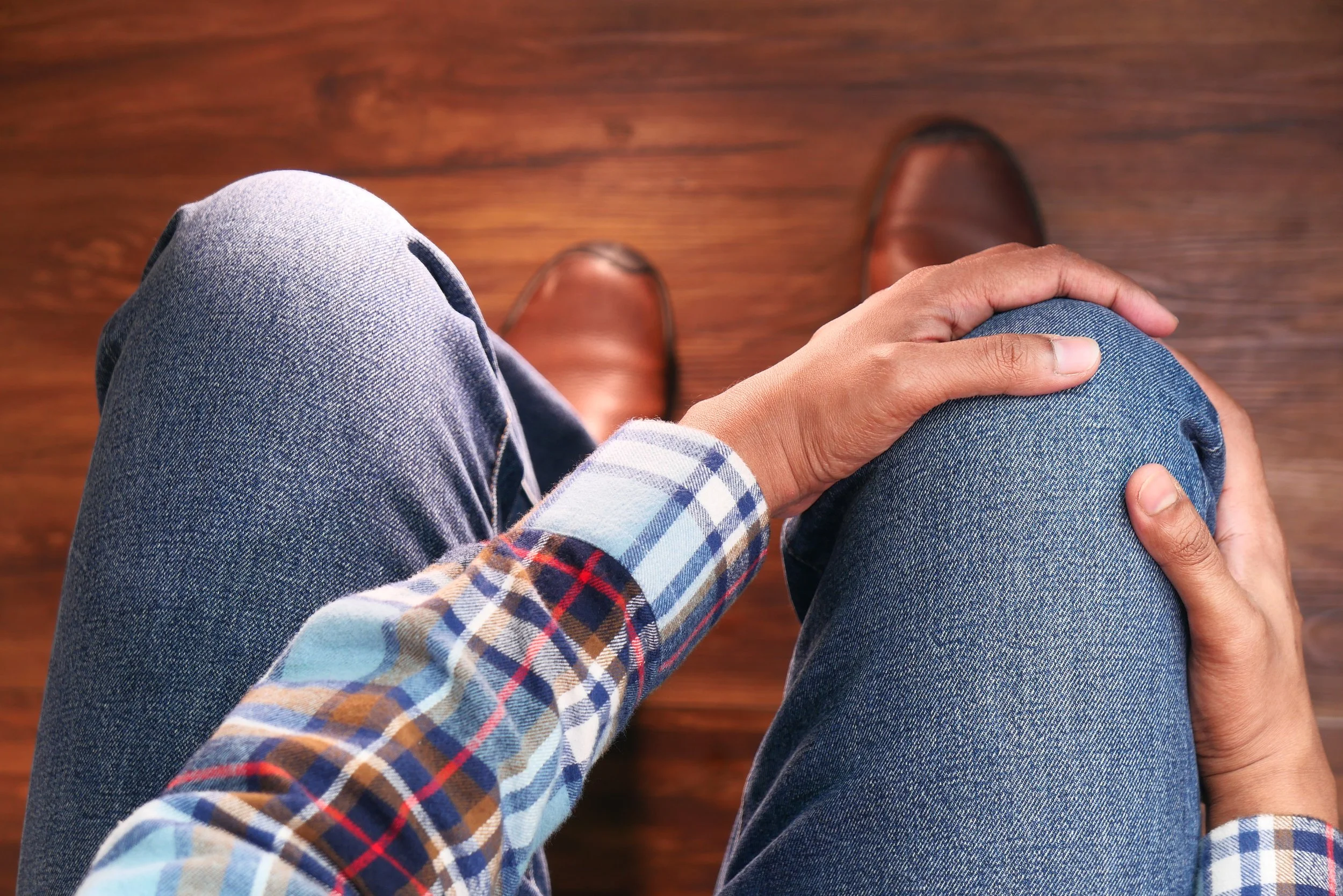
Whether you are pushing a heavy gear on a bicycle, taking wide lateral strides on roller skates, or simply hiking up Mt. Tabor, your knees act as your body’s primary shock absorbers. When they start to ache, the instinct is to brace the knee or ice the joint. However, biomechanically, the knee only does what the hip above it and the ankle below it tell it to do. If you're experiencing chronic, non-contact knee pain, the true culprit is often a weakness in your stabilizing muscles: the hip abductors. By understanding the kinetic chain, we can stop treating the symptom and start fixing the source.
The role of the hip abductors
Your hip abductors are a group of muscles located on the outer side of your pelvis, primarily the gluteus medius and gluteus minimus. Their main job is to move your leg away from the midline of your body and, crucially, to stabilize your pelvis when you are standing on one leg.
The valgus collapse: When your abductors are weak, your pelvis drops on the unsupported side with every step or pedal stroke. To compensate and keep you upright, your femur (thigh bone) rotates inward. This forces the knee to cave toward the midline—a mechanical error known as knee valgus.
The grinding effect: This inward collapse places immense sheer force on the inner knee ligaments and causes the kneecap (patella) to track improperly off its groove, leading to a dull, grinding pain right behind the kneecap.
Other common culprits behind knee pain
While weak abductors set the stage for misalignment, they often trigger a cascade of other painful conditions that show up around the knee joint.
IT band syndrome: When your gluteus medius is weak, a smaller hip muscle called the TFL overcompensates. This pulls the Iliotibial (IT) Band painfully tight across the outside of your knee. It typically presents as a sharp, stabbing pain on the outer edge, especially when the knee is slightly bent.
Patellar tendinitis (Jumper's knee): An over-reliance on your quadriceps, instead of engaging your glutes, puts constant and excessive pulling force on the tendon just below your kneecap. You will usually feel this as a deep ache directly below the kneecap that flares up with jumping, squatting, or aggressive cycling.
Ankle mobility restrictions: Because the knee is trapped between the hip and the foot, restrictions below the joint are just as damaging. If your ankle lacks flexibility (dorsiflexion), your body forces the knee to travel further forward or cave inward to achieve the necessary range of motion during a stride, resulting in generalized knee stiffness and Achilles tension.
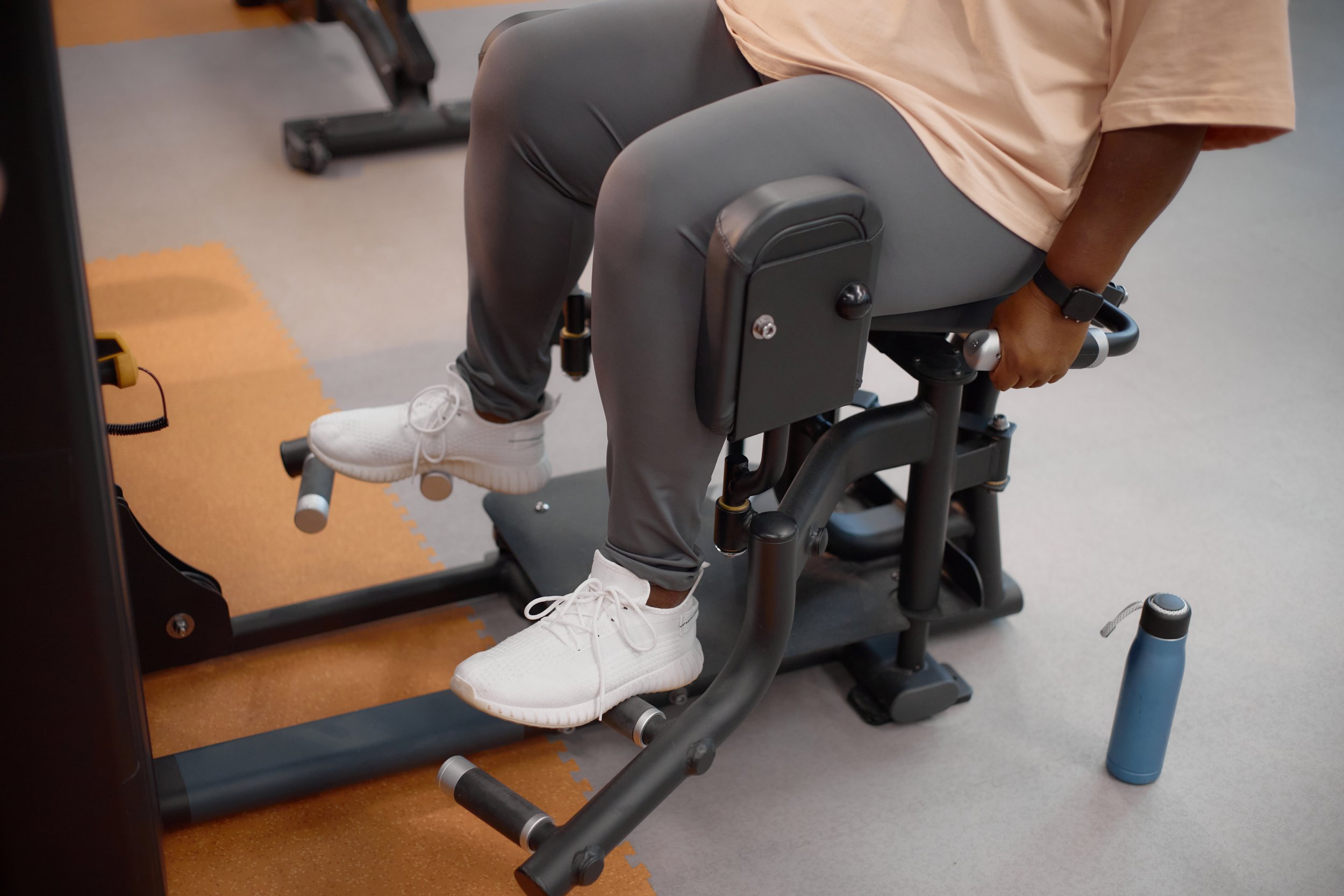
Strengthening the stabilizers: the quadruped lateral leg raise
To fix the tracking of the knee, you must strengthen the hip abductors. In a weight room you can use a machine to do this, but there’s also a solid option for home. While often casually referred to in gyms as the "fire hydrant," the clinical term for this movement is the quadruped lateral leg raise or bent-knee hip abduction.
This exercise specifically isolates the gluteus medius without putting weight-bearing stress on the knee joint.
1. Establish the quadruped base:
Start on your hands and knees on a comfortable mat. Your wrists should be directly under your shoulders, and your knees directly under your hips. Keep your spine perfectly neutral and engage your core to prevent your lower back from arching.
2. Initiate the lateral raise:
Keeping your knee bent at a 90-degree angle, slowly lift your right leg out to the side. Focus on using the muscle on the outside of your right hip to drive the movement.
3. Control the rotation:
Do not let your torso twist. Stop lifting when you feel your lower back start to twist or your left hip shift outward. The height of the lift matters far less than keeping your pelvis perfectly parallel to the floor.
4. Lower and repeat:
Slowly lower the leg back to the starting position with control. Perform 3 sets of 12-15 repetitions on each side.
5. When you’re strong enough, add resistance
Once you can perform 15 reps with perfect pelvic stability, place a light resistance band just above your knees to increase the load on the abductors.
How our clinic treats the whole kinetic chain
Rebuilding weak muscles takes time. At Parkside Clinic, our three disciplines work together to relieve the immediate knee pain while your abductors get stronger:
Chiropractic care: We assess the alignment of your pelvis and lumbar spine. A misaligned pelvis can physically inhibit the gluteal nerves from firing properly, making it challenging to strengthen the abductors no matter how dilligent you are. Adjustments restore this neurological connection.
Massage therapy: When your abductors are weak, your IT band and quadriceps are usually locked in a state of chronic spasm from overworking. Our LMTs provide targeted, deep tissue release to these compensating muscles.
Acupuncture: If you are dealing with acute inflammation (like patellar tendinitis), acupuncture is highly effective at increasing local blood flow, reducing swelling within the joint and calming the pain receptors, so you can return to your strengthening exercises comfortably.
July in Portland: Overlook Porchfest
“Mark your calendars for July 11th & 12th, 2026, for Portland’s largest DIY music festival as our Overlook neighborhood transforms its streets into a vibrant, decentralized arts venue for the fifth annual Overlook Porchfest.”

Image: Overlook Porchfest
Come visit us at Parkside
Come see our expert team at Parkside Clinic where we tailor our care to your specific condition and tap into your body’s natural healing ability. Make an appointment, or if you have any questions, contact us.