
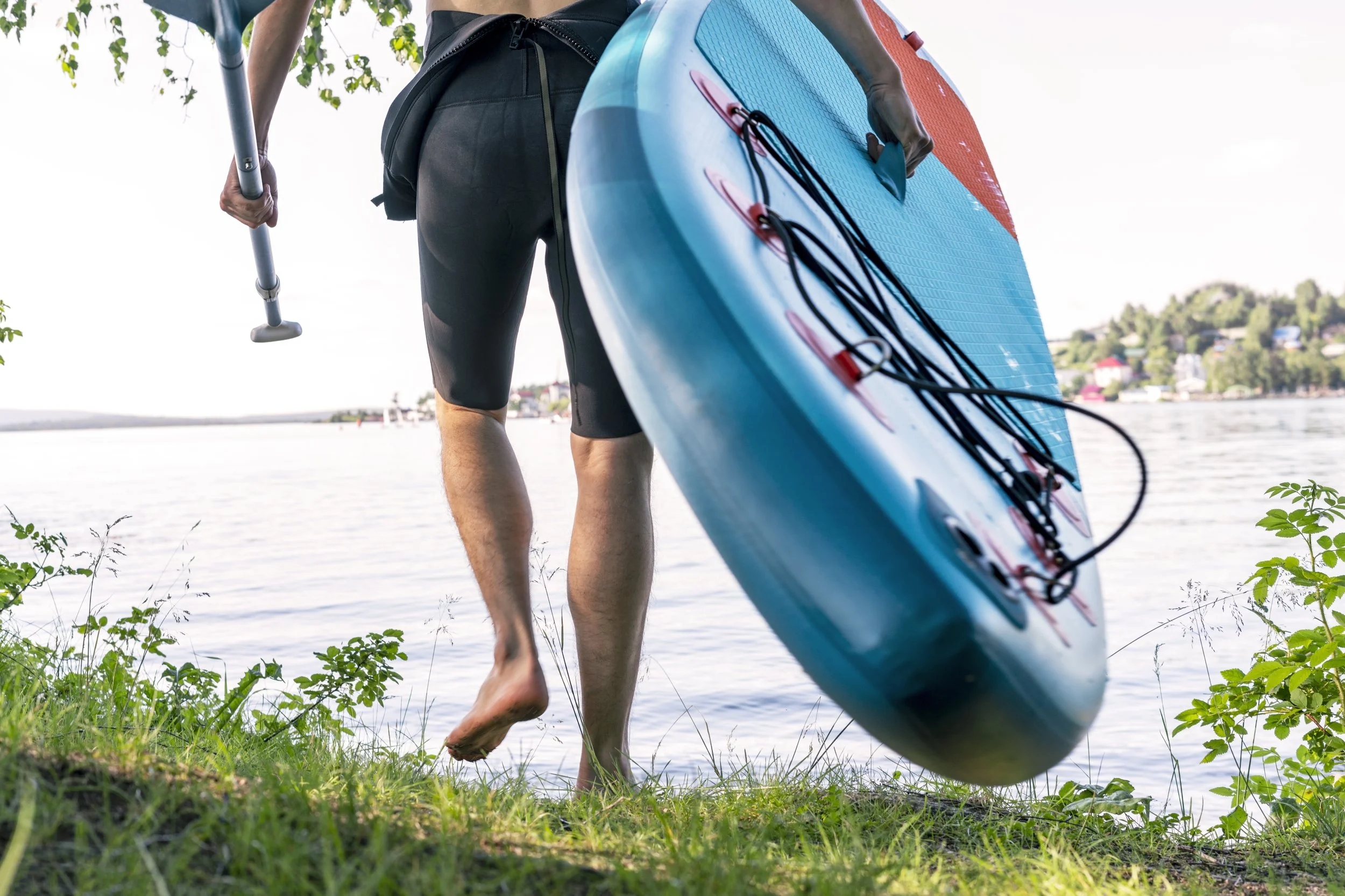
Summer in Portland means getting out on the water. On any given July weekend, the Willamette River and nearby lakes are dotted with stand-up paddleboarders (SUPs). Gliding across the water looks peaceful and effortless, often appearing like a simple upper-body workout. But what's really going on out there?
That arm workout… is an illusion
While it looks like the effort is all in the shoulders, a highly efficient paddle stroke is actually a whole-body hinge. Taking your workout to an unstable surface engages muscle groups you might not even realize you are using:
Awakening the feet and ankles: The tiny muscles in your feet and ankles are packed with mechanoreceptors—nerves that tell your brain where your body is in space. Locked in rigid shoes all day, these nerves can become dull. On a board, your feet get to grip, flex, and adjust constantly. It is an incredible, natural workout for foot mobility and balance.
Stealthy hip strengthening: As we discussed in our recent article, Get hip to your knee pain, your gluteus medius is responsible for keeping your pelvis level. On the water, these abductors fire continuously and reactively to keep you perfectly balanced over the small waves, making SUP a highly effective way to build hip stability.
Deep core bracing: Pulling the paddle through the water engages your deep core. Rather than just pulling with your shoulders—which can tire out your lower back over time—efficient paddling trains your abdominal muscles to brace and transfer power safely through your whole body.
Mastering the rotationals
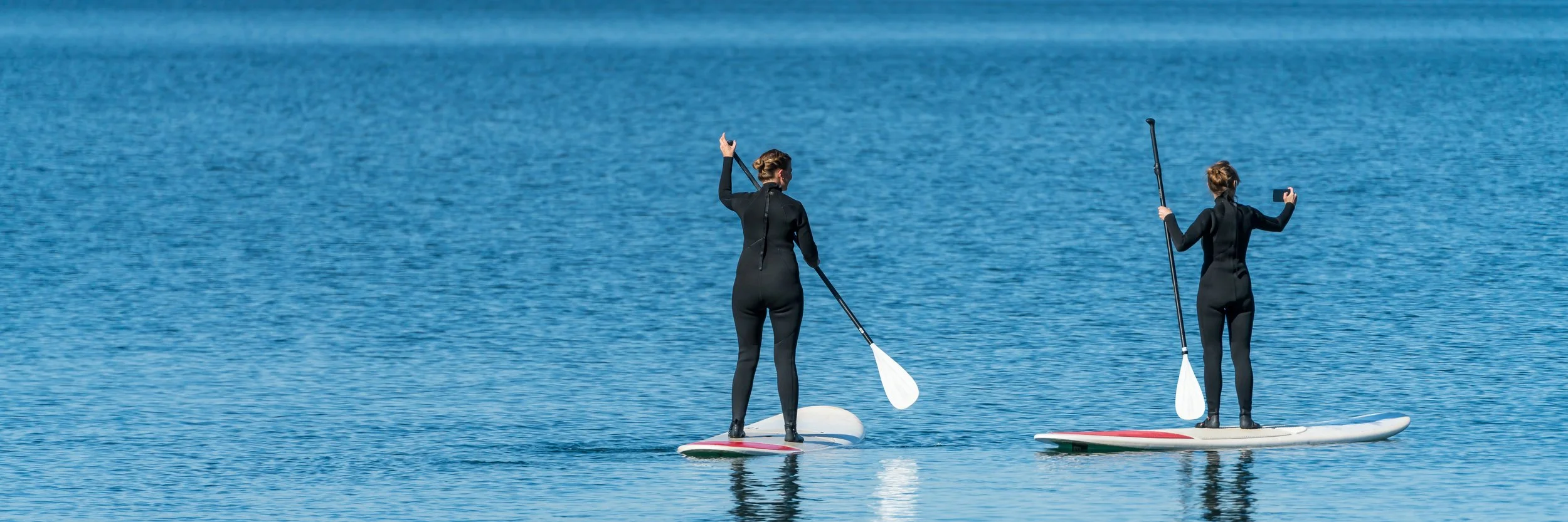
One of the most fascinating biomechanical aspects of paddleboarding is that it is a unilateral (one-sided) movement. You paddle on the right, then you switch and paddle on the left.
Every time you pull that blade through the water, you generate a massive rotational force. To paddle smoothly, your core acts as an anti-rotation stabilizer.
From a chiropractic perspective, pelvic alignment is your best friend out on the water. When your pelvis is balanced and your sacroiliac (SI) joint is moving freely, your core muscles can fire symmetrically. A chiropractic adjustment ensures your foundation is level, allowing your obliques and transverse abdominis to resist the twisting forces of the paddle, protecting your spinal discs and giving you a stronger stroke.
Strengthens a lot of things
When performed mindfully, SUP is an incredible cross-training tool—an excellent complement to the land-based activities highlighted in our Ready, Set, Run! guide. Here is how getting on the board strengthens your body:
The hip hinge: Instead of bending at the spine, a proper paddle stroke requires you to hinge at the hips. This engages the massive power of your hamstrings and gluteus maximus, strengthening your posterior chain.
Reactive stability: Because the water is always moving, your deep core muscles are forced to contract reactively, building functional, real-world stability that a traditional gym plank simply cannot replicate.
Shoulder girdle health: By keeping your arms relatively straight and twisting from the torso, you train the stabilizing muscles around your shoulder blades (like the lats and serratus anterior) to work in unison, promoting healthy shoulder mechanics.
July in Portland: Summer Free for All
Movies in the Park is just the beginning — there are many ways to enjoy a summer evening in one of Portland’s world-class parks.

Image: portland.gov
Come visit us at Parkside
Come see our expert team at Parkside Clinic where we tailor our care to your specific condition and tap into your body’s natural healing ability. Make an appointment, or if you have any questions, contact us.